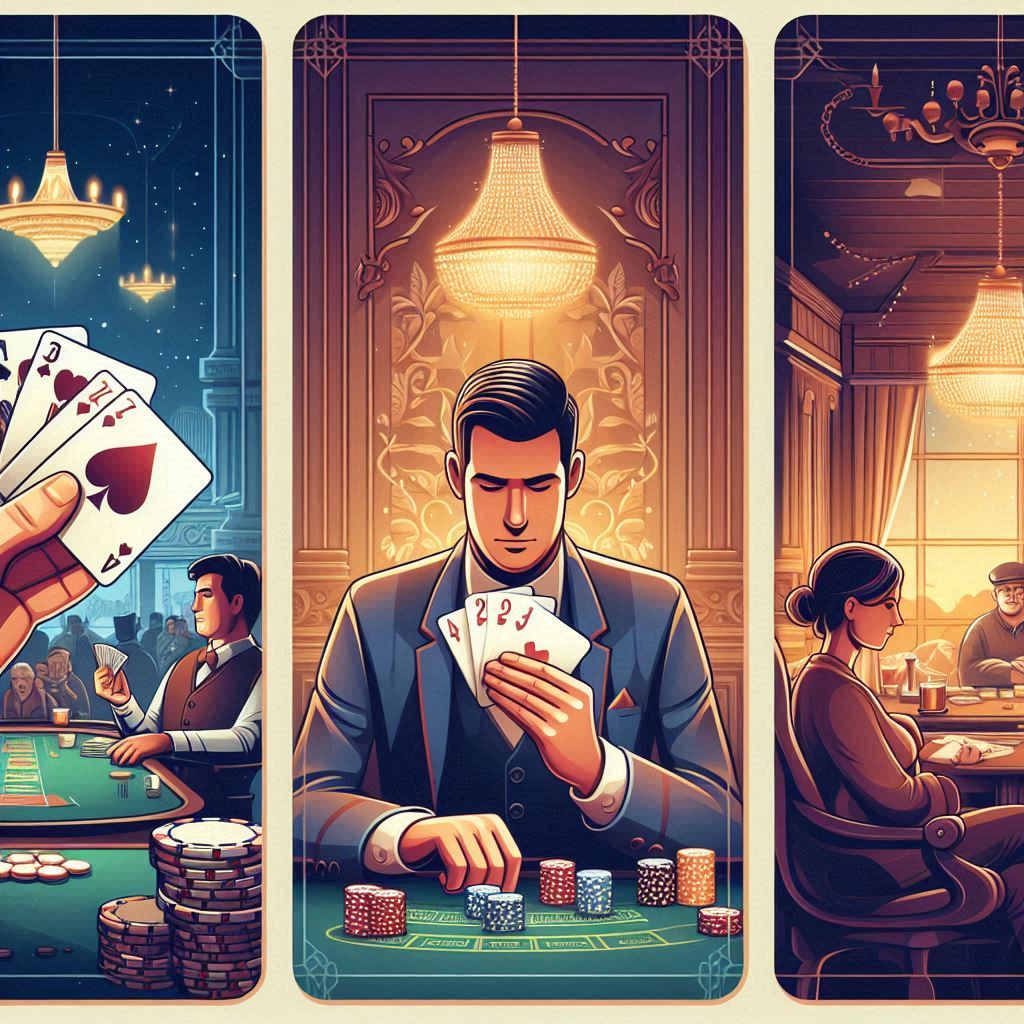
donsreeladventures.com – Playing cards are one of the oldest and most universal gaming tools in human history. They’ve survived entire empires, evolved across continents, and adapted to every generation’s entertainment habits. Whether used for gambling, strategy, storytelling, magic, or simple family fun, playing cards remain timeless. But with so many regional styles, historical designs, and modern variations, one question stands out: what is the most common type of playing card?
The world is filled with unique card traditions—from Japanese Hanafuda to Italian regional decks to Indian Rummy decks—yet only one specific deck style dominates global culture.
The most common type of playing card in the world is the standard 52-card French-suited deck, featuring:
-
hearts
-
diamonds
-
clubs
-
spades
-
13 ranks per suit
-
usually including 2 jokers
This single deck supports hundreds of common playing card types of games, from Poker to Blackjack, from Rummy to Solitaire, from Hearts to Bridge, and countless regional variations.
Before diving deeper, it helps to situate this in a broader introduction to card games — how different card structures shape the ways people play, and why the French-suited deck became the global standard.
Why the Standard 52-Card Deck Is the World’s Most Common
1. Global Spread Through European Colonization
In the 17th–19th centuries, France and England exported their card traditions worldwide. As colonies spread across Asia, Africa, and the Americas, so did the French-suited deck, eventually overtaking other regional styles.
2. Versatility: One Deck, Thousands of Uses
The standard deck works for:
-
casino games
-
children’s games
-
strategy games
-
family games
-
competitive tournaments
-
magic tricks
-
drinking games
-
mental puzzles
-
solo games
-
digital card apps
No other deck supports such a broad range of playstyles.
3. Cultural Longevity
The French-suited deck has existed for centuries and hasn’t been replaced, even as digital entertainment rose.
4. Universal Recognition
Every player knows:
-
Ace
-
King
-
Queen
-
Jack
-
numbers 2–10
-
four suits
This shared literacy makes it globally accessible.
5. Cheap, Easy, and Mass-Produced
Card decks are:
-
inexpensive
-
easy to manufacture
-
durable
-
compact
Billions have been printed, making them the most widely owned game tool in the world.
Breaking Down the Standard 52-Card Deck
To understand why it dominates, we need to examine its structure.
The Four French Suits
1. Hearts ♥
Traditionally linked to clergy or love themes in European symbolism.
2. Diamonds ♦
Associated with merchants or wealth.
3. Clubs ♣
Inspired by the French “clover,” representing farmers or labor classes.
4. Spades ♠
Derived from the French “pique,” symbolizing nobility or military.
These suits spread globally because their designs are clear, bold, and easy to print with early printing technologies.
The Ranks
Each suit includes 13 ranks:
-
Ace
-
2 through 10
-
Jack
-
Queen
-
King
This creates a beautifully balanced system:
-
52 total cards
-
4 suits × 13 ranks
-
even distribution of probabilities
-
mathematical symmetry perfect for gaming and strategy
It’s the reason so many common playing card types share similar mechanics.
The Jokers
Most modern decks include two Jokers, originally created in 19th-century America for the game of Euchre. Jokers have since become:
-
wild cards
-
trump cards
-
bonus cards
-
replacements in certain rule sets
-
tools for magic routines
Though not used in every game, Jokers expanded the deck’s flexibility even further.
Why the French-Suited Deck Outranked Others
Many ancient and regional decks still exist today, yet none became as dominant. Here’s why alternatives didn’t take the global lead.
1. Hanafuda (Japan)
Beautiful artwork but complex structure; limited to specific cultural games.
2. Italian Regional Decks
Great for local trick-taking games but lack global recognition.
3. Spanish Decks
Popular in Latin America and Spain, but lack the Queen and use 40–48 cards.
4. German-Suited Decks
Still seen in Central Europe, but unfamiliar to most global players.
5. Tarot Decks
Historically significant, but too large and specialized for everyday play.
Compared to these, the standard deck was:
-
simpler
-
easier to produce
-
more adaptable
-
more exportable
This practicality is what propelled it into the global mainstream.
Games That Made the Standard Deck the World’s Most Common
The dominance of the French-suited deck isn’t just historical—it’s tied to iconic games that shaped modern gaming culture.
1. Poker — The Global Competitive Icon
Poker (especially Texas Hold’em) has elevated the 52-card deck to legendary status. Casinos, tournaments, films, and online platforms turned Poker into a worldwide phenomenon.
Why Poker Reinforced the Standard Deck
-
memorability of ranks
-
bluffing and psychological strategy
-
easy-to-learn structure
-
professional circuits
-
huge online communities
Poker alone has entrenched the French deck in global entertainment.
2. Blackjack — The Casino Essential
Blackjack uses the standard deck’s mathematical balance perfectly.
Why Blackjack Matters
-
simple gameplay
-
fast-paced rounds
-
optimal strategy and card counting
-
universal presence in casinos
The entire casino industry reinforces the standard deck’s dominance.
3. Rummy & Gin Rummy — The Family Classics
Rummy variants use the ranking system elegantly.
Why Rummy Popularized the Deck
-
multi-generational play
-
easy to learn
-
used across homes worldwide
-
adaptable rules
Almost every country has a unique form of Rummy.
4. Solitaire — The Digital Explosion
When Microsoft added Solitaire to Windows in 1990, billions of people learned the 52-card deck digitally.
Impact
-
massive cultural reach
-
universal familiarity with suits and ranks
-
global digital imprint
Solitaire turned playing cards into a daily routine for office workers and students everywhere.
5. Bridge, Hearts, and Spades — The Social Giants
These trick-taking games rely on the deck’s perfect probability symmetry.
Why They Matter
-
competitive leagues worldwide
-
club culture
-
partnership strategy
-
longevity in schools and communities
These games keep traditional card culture alive.
Common Playing Card Types: Beyond the Standard Deck
Even though the 52-card deck is the most common, other recognizable types exist:
1. Standard 52-card deck (French-suited) — Globally dominant
2. 54-card deck with Jokers — Used for Rummy, Solitaire, War, etc.
3. 32-card Piquet deck — Used in Schafkopf or Bezique
4. 40-card Spanish deck — Popular in Spain & Latin America
5. 48-card Italian deck — Used for Briscola and Scopa
6. Tarot deck — Used for Tarot games & reading
Still, none of these reach the scale or popularity of the French 52-card deck.
Why the 52-Card Deck Will Always Remain the Most Common
The reasons go beyond tradition:
Universal Literacy
People instantly recognize card symbols, values, and suits.
Cross-Genre Compatibility
Works for:
-
gambling
-
casual games
-
strategy
-
party games
-
magic
Cultural Neutrality
Unlike themed or branded decks, the standard deck fits any setting.
Low Production Cost
Printing requires minimal materials and technology.
Digital Reinforcement
Apps, online games, and mobile platforms keep it relevant for new generations.
In short, the standard deck is too flexible, too accessible, and too culturally embedded to ever be dethroned.
So, what is the most common type of playing card?
The answer is clear and global: the standard 52-card French-suited deck — the backbone of the world’s common playing card types and the foundation upon which modern card culture is built.
From Poker tables in Las Vegas to family nights at home, from mobile Solitaire apps to grandmaster Bridge tournaments, the 52-card deck remains the world’s universal gaming language. Its simple structure hid enormous depth, allowing it to support hundreds of unique games, countless traditions, and entire industries.
More than a deck — it is a global icon.